



Scuba diving & Snorkeling Tours with Diver’s Paradise
Experience REEFLINE Miami — the world’s first underwater sculpture park and hybrid reef located just off Miami Beach; where art and conservation science meet.
As REEFLINE’s official scuba diving and snorkeling partner, Diver’s Paradise offers guided tours to explore underwater sculptures, artificial reefs, tropical marine life, and one of Miami’s newest ocean attractions.
All REEFLINE trips with Diver’s Paradise include educational interaction with a REEFLINE representative.
What to Expect on Your Miami REEFLINE Tour
Scuba Diving + gear (certified divers)
Price: $210
Snorkeling + gear (minimum 8 yrs old)
Price: $149
Discover Scuba (try diving in 1 day – no experience needed)
Price: $399
You’ll visit two sites: REEFLINE and a nearby natural reef. Each trip lasts approximately 4 hours, giving you plenty of time to explore underwater sculptures, tropical marine life, and Miami’s vibrant reef ecosystem — don’t forget to bring snacks!
All trips include free on-site parking plus onboard amenities like water, sodas, oranges, a restroom, and heated showers for a comfortable day on the water.
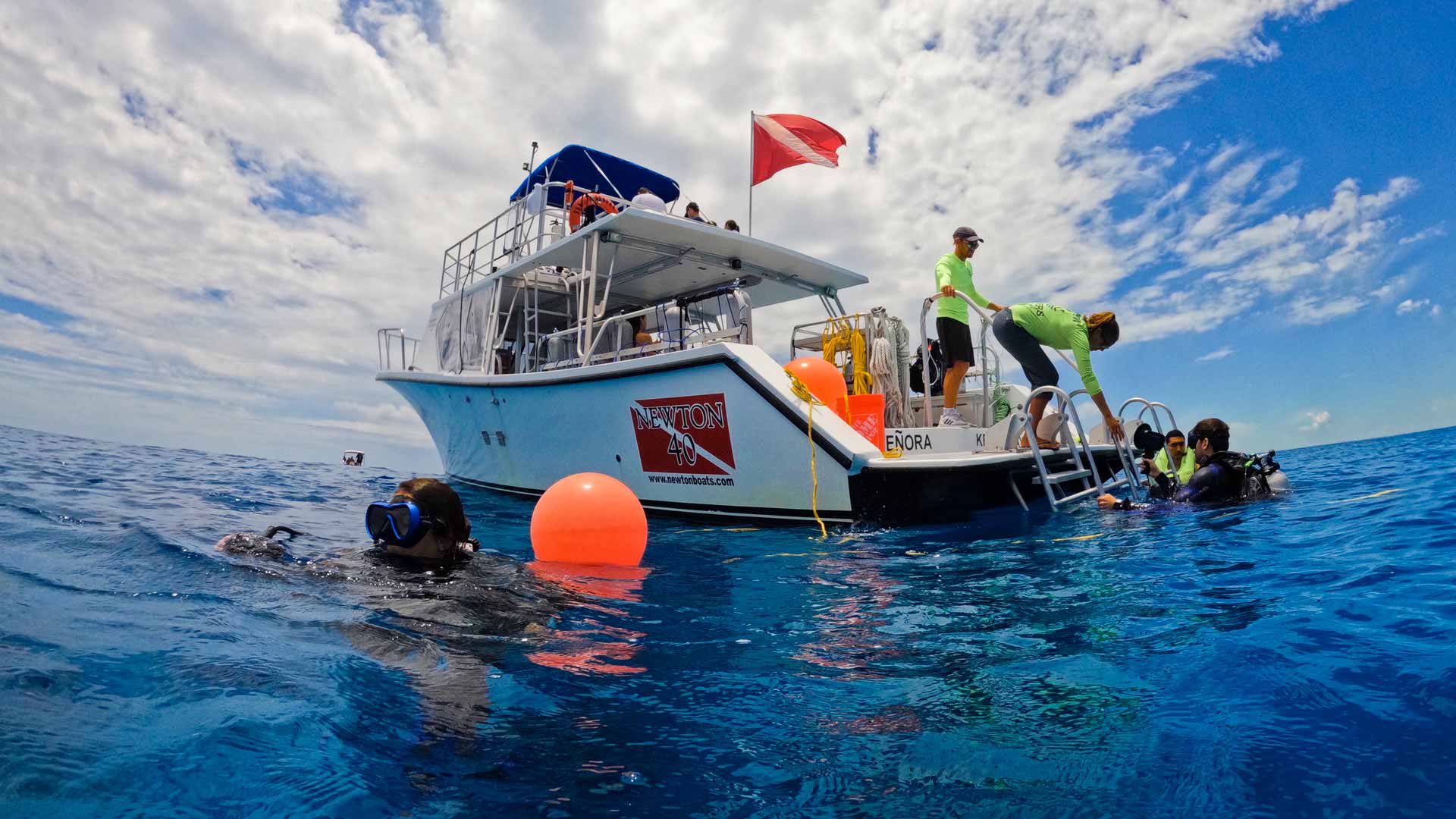
Discover Scuba
A 1- day experience for non-certified divers
Step into the underwater world with our Discover Scuba Diving experience — no certification required.
Begin in our heated training pool, learning essential skills and getting comfortable with your equipment under the guidance of a professional instructor. That same afternoon, explore REEFLINE and Neon Reef—where art and marine life coexist—embarking on two breathtaking open water dives aboard our custom dive boats.
Includes: Pool session, full gear, direct supervision and two ocean dives
Price: $399
Click below > find the next available Reefline Hybrid Trip > select book now > select Discover Scuba
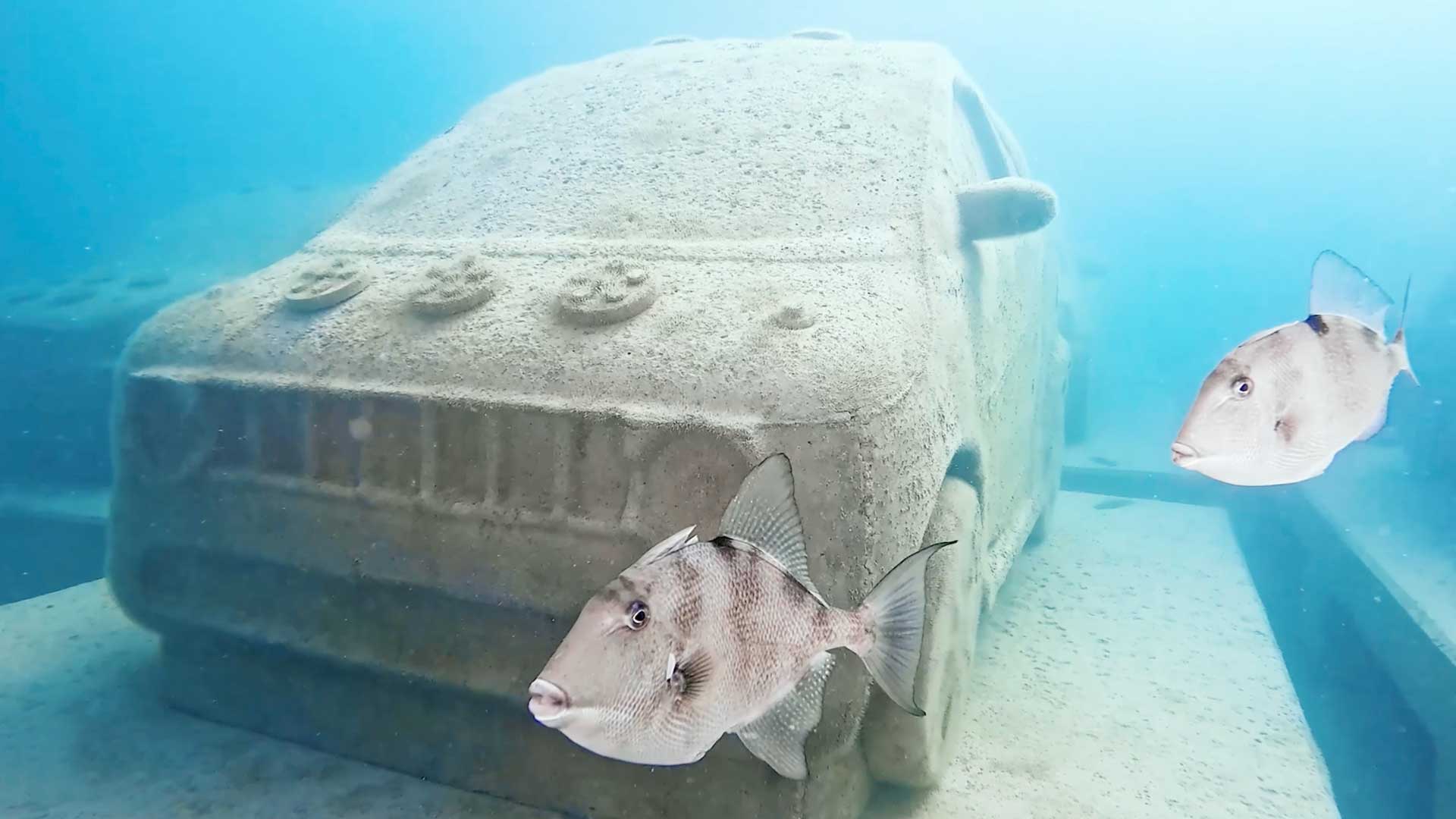
Image courtesy of REEFLINE

Miami is replete with diverse cultures that have influenced all parts of the city. The Miami ocean is no different.
REEFLINE provides a platform for marine life to thrive, teaming up with nature to build resilience beneath the waves. The monumental sculptures double as hybrid reefs, merging artistic vision with ecological function.
By pioneering blue technologies and creative interventions, REEFLINE fosters biodiversity and lasting cultural, ecological and economic value. During the next decade, REEFLINE intends to plant thousands of corals and shape a new blueprint for enhancing worldwide marine ecosystems.
Through an exclusive partnership with REEFLINE, Diver’s Paradise continues its longstanding conservation efforts to revive our beautiful marine universe.
Video courtesy of Nola Schoder
Miami Beach’s New Traffic Jam Frolics With the Fishes
A New York Times critic explores “Reefline,” an underwater public sculpture park that hopes to be a haven for art and corals. But some skeptics question the scientific benefits.
By Blake Gopnik—New York Times—December 1, 2025
I’ve reviewed art in a tuxedo.
I’ve reviewed it in shorts and sneakers.
I’ve reviewed it in a fur hat and snow boots.
But I’ve never before done my critic’s job in wetsuit and flippers.
I’d be tempted to make a habit of it, now, if only I could get our museums to flood.
On a sunny November day off Miami Beach, I went aquatic for the first time to take in Reefline, a new program of underwater public art that has sunk its first project 20 feet below the waves, some 800 feet from shore. For “Concrete Coral,” the Argentine artist Leandro Erlich produced 22 sculptures of automobiles, made from concrete at life size, then had them lined up on the sea floor in a traffic jam 90 feet long.
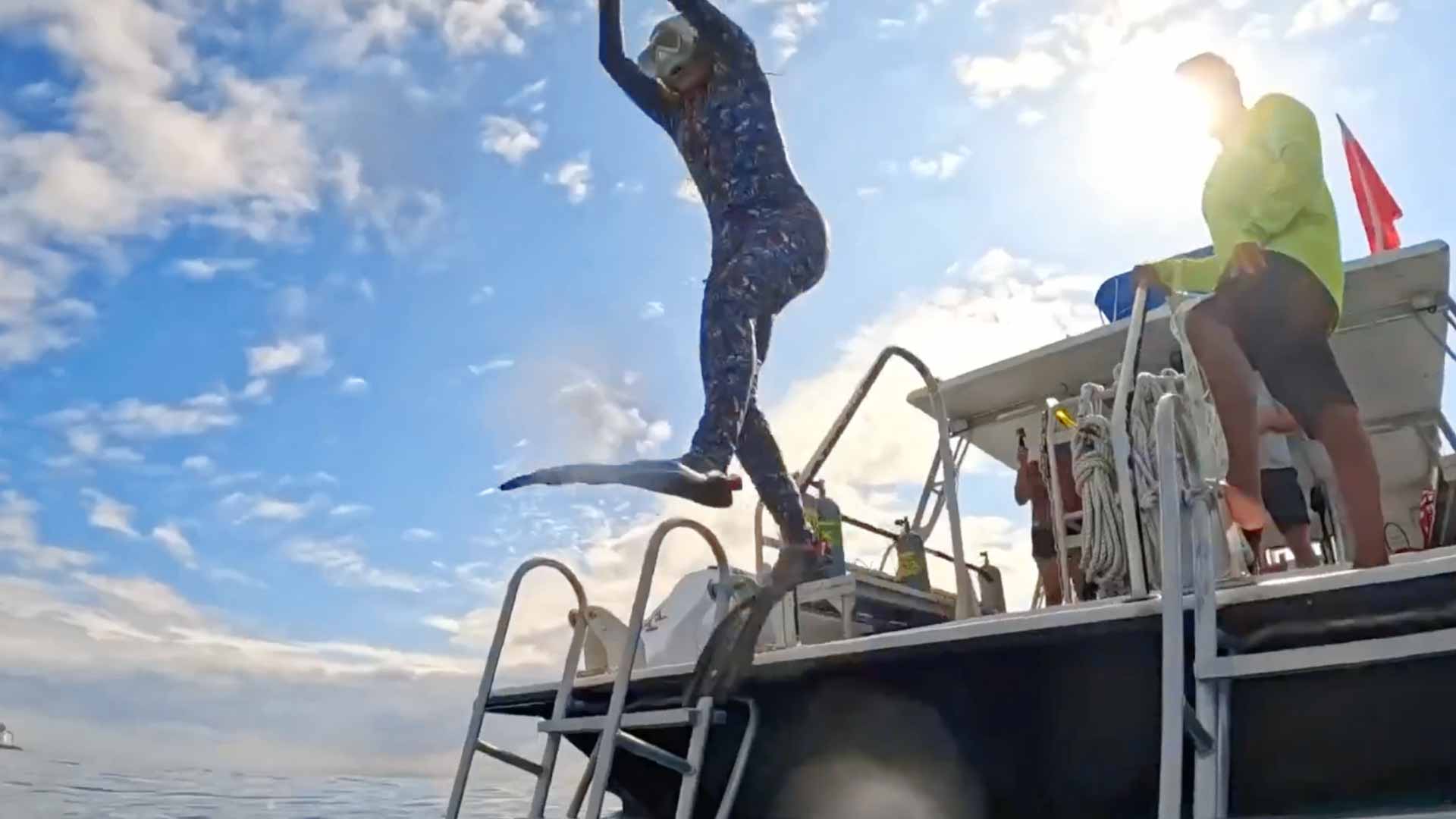
Floating above those “cars,” diving among them, felt like an almost ideal art experience (minus the occasional gulp of seawater, for this neophyte snorkeler).
Without the distractions of terrestrial art-looking — nearby selfie-takers, grumpy tweens or your own pinging phone — your concentration on the art seems almost automatic. Hardly any sounds reach your ears; the buoyancy of salt water and wet suit makes your physical self nearly disappear. With the surrounding ocean remote and dark, Erlich’s sculptures, seeming spotlighted by the Florida sun, become just about the only thing to take in, letting you contemplate their aesthetics and meanings at leisure.
Do those cars portray a near future when nearby coastal roads get submerged from sea-level rise?
Or a postapocalyptic water-world that has left humans quite behind?
Or maybe a post-car U.S.A. that has seen us drown our rides in favor of less noxious transportation? On my dive, Erlich’s traffic jam seemed already on its way to being reclaimed by nature, with spadefish, angelfish, trigger fish and shark-loving remoras beginning to find a home there.
And all those experiences and readings might be almost irrelevant to the true, full mission of Reefline.